What COMPUTEX 2026 Reveals About the Future of Smart Workspaces
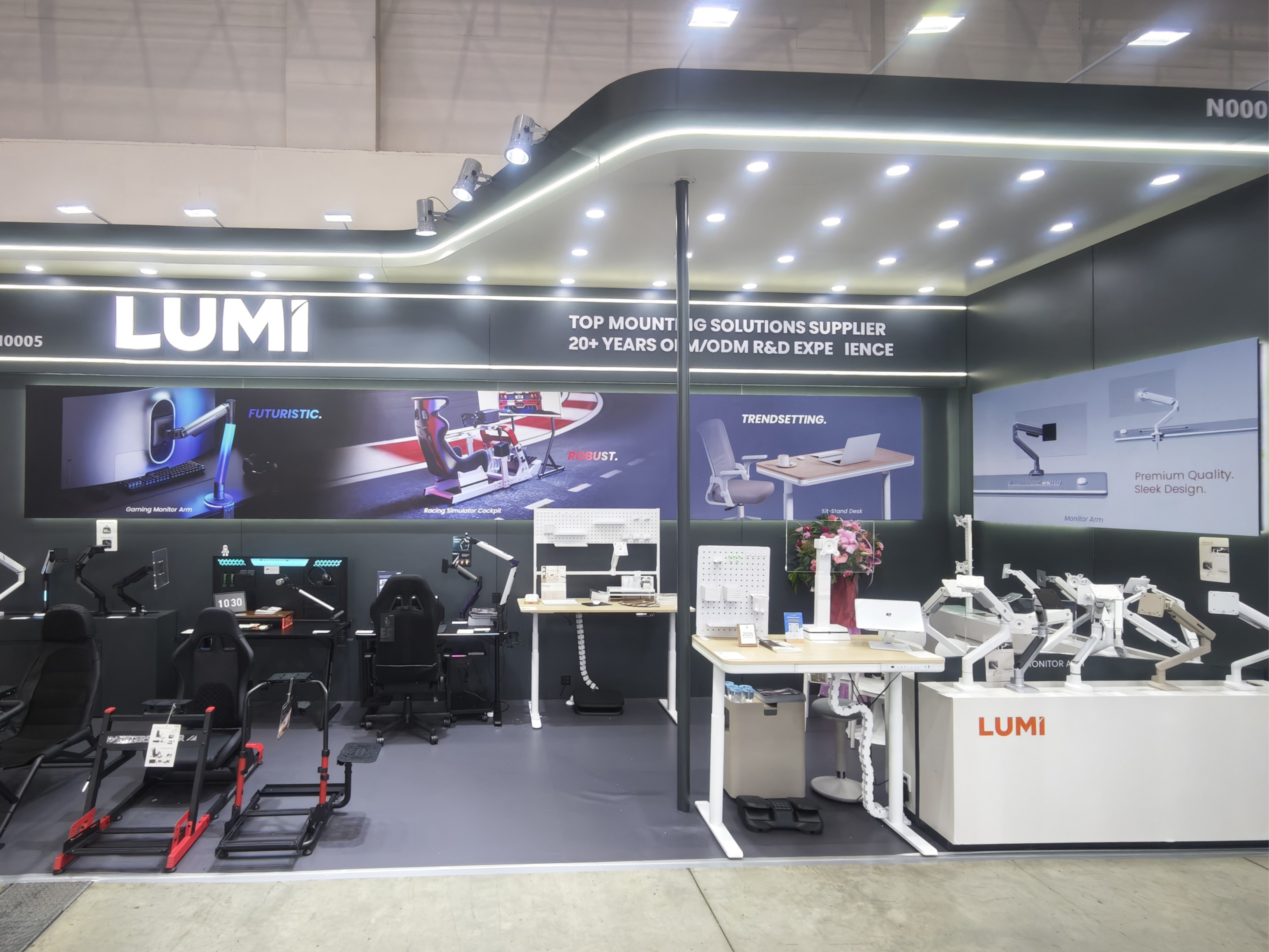
The 2026 edition of COMPUTEX, themed “AI Together”, goes beyond showcasing new technologies and reflects how artificial intelligence is becoming deeply integrated into everyday workflows across industries. Rather than functioning as a standalone tool, AI is increasingly embedded within the systems that support collaboration, data analysis, and task execution.
As this integration continues, the concept of the workplace is also evolving. Work is no longer confined to a fixed desk, a single screen, or a specific location. Instead, it now takes place across connected environments where cloud platforms, AI applications, and local devices operate together. As a result, productivity is no longer defined only by software efficiency or hardware performance, but also by the quality of the physical workspace itself—particularly in terms of comfort, flexibility, and long-term usability.
For buyers in office equipment and consumer electronics, this shift represents more than a gradual trend. It signals the formation of a new category: the AI-native smart workspace ecosystem.
Table of Contents
• AI-Native Work Is Redefining Everyday Productivity
• Productivity Is Becoming the New Baseline Standard for Workspaces
• From Tools to Ecosystems — What COMPUTEX 2026 Signals for Buyers
• How LUMIVIDA Ergonomic Solutions Enable the AI Workplace
• The Hidden Bottleneck in AI Growth — Human Sustainability
• What Smart Workspace Trends Mean for Market Buyers
• Final Action Plan — Capturing the Next Smart Workspace Opportunity
• Conclusion: The Future of Work Is Both Intelligent and Human-Centric
AI-Native Work Is Redefining Everyday Productivity
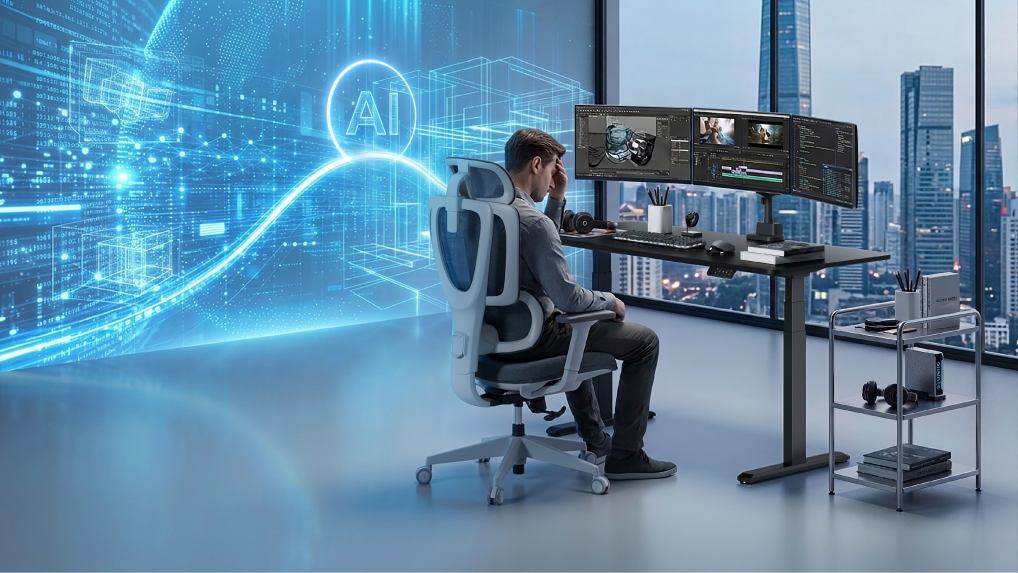
AI has already become part of everyday work routines in many industries. Tasks such as summarizing meetings, writing content, analyzing data, or organizing schedules are now completed in shorter cycles than before.
However, one change is often overlooked: the level of interaction between people and devices has increased significantly.
Employees are now:
• Working across multiple screens and applications at the same time
• Handling several AI outputs in parallel workflows
• Spending longer continuous hours in focused digital tasks
• Relying more heavily on visual attention and cognitive input
While AI reduces manual workload, it also increases interaction intensity.
This leads to a set of practical workplace challenges:
• More strain on neck and shoulders from prolonged screen usage
• Mental fatigue caused by frequent task switching
• Reduced physical movement during working hours
• Increasing complexity and clutter on the desktop environment
As COMPUTEX 2026 highlights developments in AI chips, edge computing, and intelligent systems, another layer becomes equally important: the physical setup that supports long-hour digital work.
This is where ergonomics plays a more essential role than ever.
Productivity Is Becoming the New Baseline Standard for Workspaces
Office environments used to focus mainly on layout, aesthetics, and basic functionality. Over the past few years, hybrid work has already pushed companies toward more flexible setups. Now, AI is pushing workplace design into a more performance-driven direction.
Across industry research and leading workspace brands such as Herman Miller, Steelcase, and Logitech, one consistent direction is clear: productivity is no longer an added feature—it is becoming the baseline expectation.
Three major shifts define this change:
1. From Static Desks to Adaptive Environments
Workspaces are moving away from fixed layouts and toward flexible environments that support different working modes throughout the day.
2. From Single Devices to Multi-Screen Ecosystems
Most AI-driven workflows now rely on multiple displays and connected devices, which increases demand for monitor arms, docking systems, and structured cable management solutions.
3. From Short-Term Comfort to Long-Term Health Focus
Companies are increasingly aware that poor ergonomics directly affects productivity, concentration, and long-term operational cost.
As a result, ergonomic design is no longer treated as an optional upgrade, but as part of productivity planning.
From Tools to Ecosystems — What COMPUTEX 2026 Signals for Buyers
One of the key directions emerging from COMPUTEX 2026 is the closer integration of hardware, software, and workspace design.
For buyers in office equipment and consumer electronics, this leads to several practical shifts:
1. Demand is Moving Toward Integrated Workspace Systems
Individual products are being replaced by complete workspace setups that combine devices, furniture, and accessories into a unified system.
2. Procurement Focus is Shifting Toward Experience
Instead of focusing only on technical specifications, buyers now consider:
• Comfort during long working hours
• Flexibility across different working environments
• Compatibility with AI-driven workflows
• Visual and spatial integration in modern offices and homes
3. Hybrid Work Continues to Expand the Market
The boundary between home office and corporate workspace is becoming less defined, creating demand for flexible, cross-environment solutions.
4. Durability and Lifecycle Value Are Becoming Key Factors
With faster hardware replacement cycles driven by AI adoption, long-lasting ergonomic products are gaining more attention from procurement teams.
In this environment, companies that can connect technology with human experience are better positioned for long-term growth.
How LUMIVIDA Ergonomic Solutions Enable the AI Workplace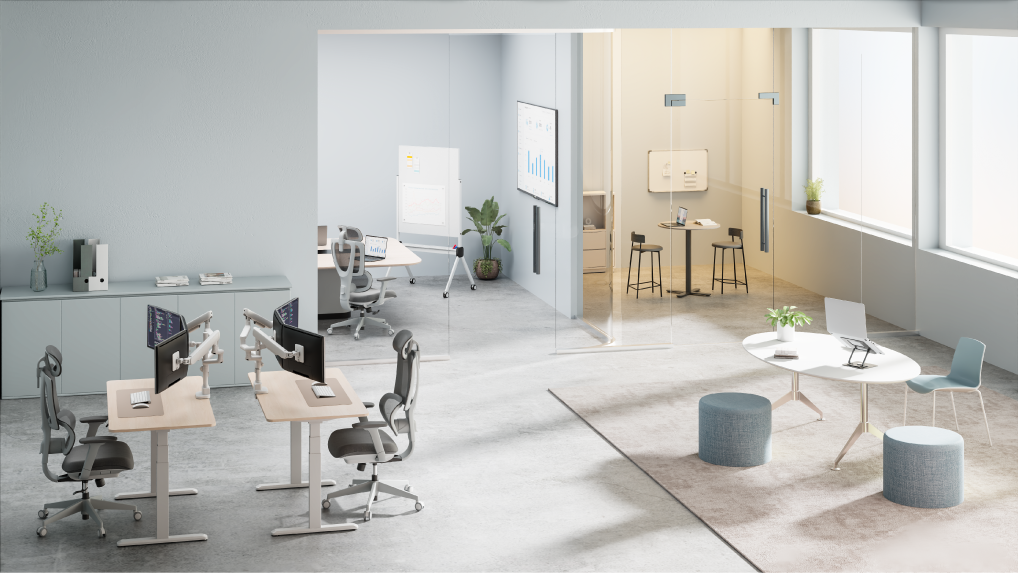
As AI changes how work is performed, ergonomic systems help ensure that increased productivity does not come at the cost of physical strain or long-term inefficiency.
LUMIVIDA’s product ecosystem—including monitor arms, sit-stand desks, laptop risers, and cable management systems—supports these new requirements in practical ways.
1. Supporting Multi-Screen Workflows
AI-based workflows often require multiple displays for comparison, monitoring, and content creation. Adjustable monitor arms help users:
• Adjust viewing angles more easily
• Reduce strain on the neck and shoulders
• Keep desk layouts clean and organized
2. Supporting Movement in Long Working Hours
Sit-stand desk systems are becoming more important in environments where users remain in front of screens for extended periods. Alternating posture helps:
• Improve circulation
• Maintain focus over time
• Reduce physical fatigue
3. Reducing Cognitive Load Through Organization
Cable clutter and poorly structured desks may seem minor, but they contribute to mental fatigue. A more organized workspace helps users stay focused in information-heavy environments.
4. Improving Device Integration Efficiency
As users manage multiple devices at once, ergonomic accessories help with:
• Better device positioning and airflow
• More efficient workspace layout
• Easier switching between tasks
Overall, LUMIVIDA’s approach aligns with a key idea seen at COMPUTEX 2026: productivity depends heavily on how well people and systems operate in the same environment.
The Hidden Bottleneck in AI Growth — Human Sustainability
While AI continues to improve efficiency at a system level, human physical capacity remains unchanged.
Without proper ergonomic support, organizations may face the following:
• Higher levels of fatigue and burnout
• Reduced productivity during long working hours
• Increased healthcare-related costs
• Lower employee satisfaction in hybrid work models
There is a clear imbalance emerging in many workplaces:
As systems become faster and more automated, the physical demands on users continue to rise.
This makes ergonomic design less of a secondary consideration and more of a structural requirement for sustainable work environments.
What Smart Workspace Trends Mean for Market Buyers
The evolution of workplace design is also changing how purchasing decisions are made.
Key shifts include:
| Area | Direction |
| Product Definition | From hardware to workspace systems |
| Value Evaluation | From specs to user experience |
| Target Users | From IT departments to broader procurement teams |
| Market Scope | From office-only to hybrid environments |
A key change is emerging:
Buyers are no longer just selecting products—they are choosing how entire work environments are built.
Final Action Plan — Capturing the Next Smart Workspace Opportunity
To align with the evolution of AI-driven workplaces, market participants can focus on several directions:
1. Reposition Product Messaging
Move from “office accessories” to “AI workspace enablers”, focusing on productivity and long-term usability.
2. Build System-Level Product Bundles
Combine desks, monitor arms, docking systems, and organization tools into complete workspace solutions.
3. Expand Across Hybrid Channels
Target both corporate and home office segments, as well as co-working environments.
4. Strengthen Educational Content
Explain how ergonomics, AI workflows, and productivity are connected in real working environments.
Conclusion: The Future of Work Is Both Intelligent and Human-Centric
COMPUTEX 2026 highlights a workplace that is becoming increasingly connected and system-driven. While technology continues to improve speed and efficiency, the physical environment in which people work is becoming just as important. The next stage of growth in the office and consumer electronics industries will depend not only on smarter tools, but also on better-designed working environments that support people over longer periods of use.
In this context, ergonomic solutions are becoming a core part of modern workspace design rather than a supporting category.
Ready for the AI-driven workplace? Upgrade your ergonomic solutions for modern work environments and turn everyday challenges into new opportunities with LUMIVIDA. Explore our 2026 Best-Selling Catalog today.