What Electrolar Show 2026 Reveals About the Future of Consumer Electronics
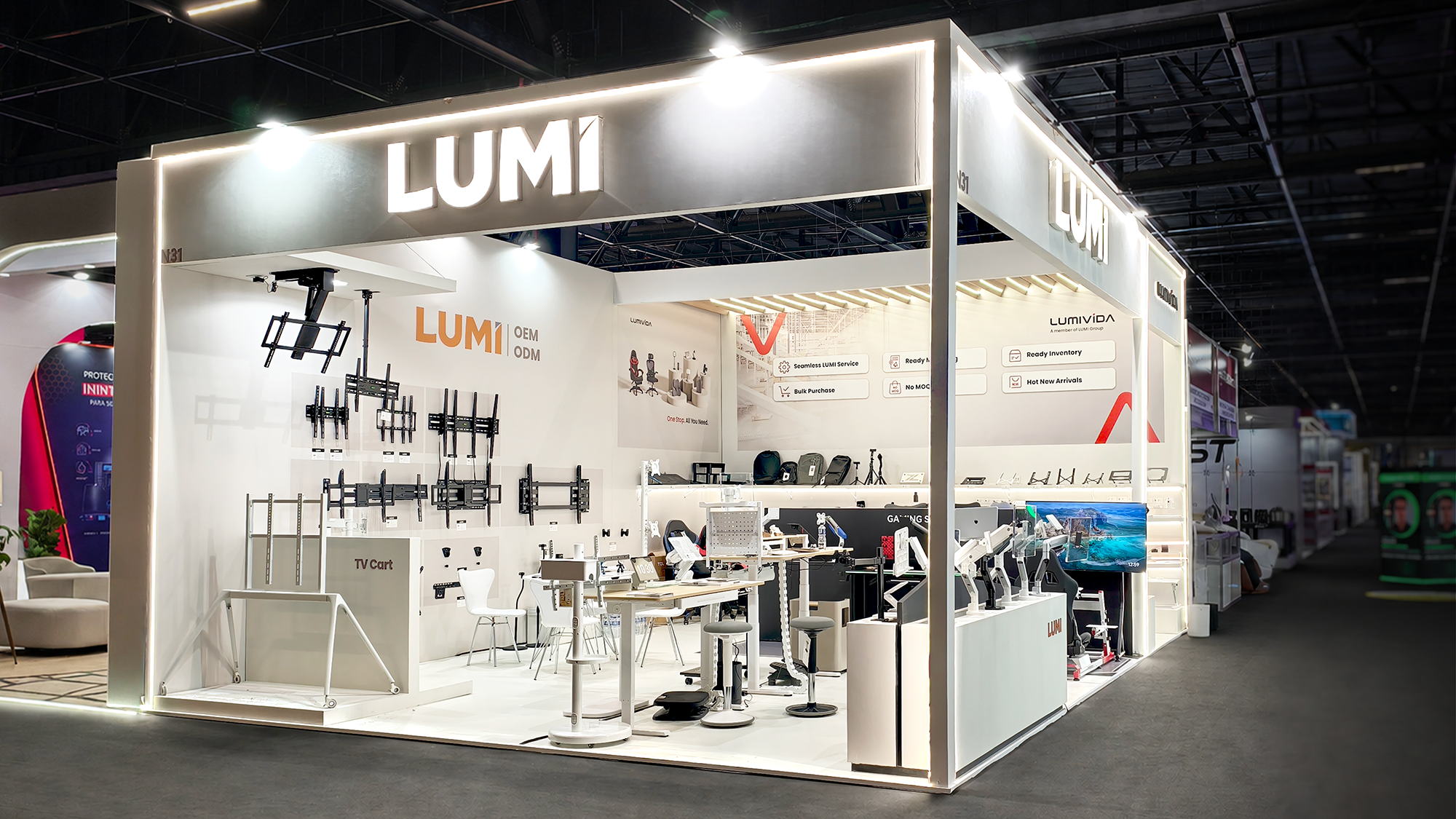
Table of Contents
• From Products to Experiences: Why Consumer Expectations Are Changing
• From Devices to Use Cases: How Consumer Electronics Are Becoming Scenario-Based
• Smart Workspaces: A High-Growth Opportunity in Consumer Electronics
• Key Priorities for Distributors Building a Smart Workspace Portfolio
• How LUMIVIDA Supports Complete Workspace Solutions for Distributors
• Conclusion: Turning Consumer Trends Into Business Growth
Electrolar Show 2026 highlighted a clear shift in the consumer electronics industry: the market is moving from selling individual products to delivering complete lifestyle experiences. For distributors, this change creates a practical opportunity. Instead of competing only on price, product category, or technical specifications, distributors can build solution-based portfolios that match how people actually live, work, study, and interact with technology.
According to Eletrolar News, the 2026 show is evolving into an “All Connected” business experience, bringing together consumer electronics, smart homes, lighting, mobility, sustainability, AIoT, retail media, logistics, and other connected sectors. This is more than an exhibition update. It reflects a wider change in the consumer electronics market.
Consumers no longer see technology as separate devices. A monitor arm is not just a bracket. A sit-stand desk is not just office furniture. A monitor light bar is not just a lamp. A cable management system is not just an accessory. Together, these products create a cleaner, healthier, and more flexible workspace.
For ergonomic product distributors, this is an important signal. As hybrid work, home offices, gaming setups, online learning, and compact living spaces continue to influence buying behavior, the next growth opportunity is not only in electronics innovation. It is in smart living products that solve real environment-based problems.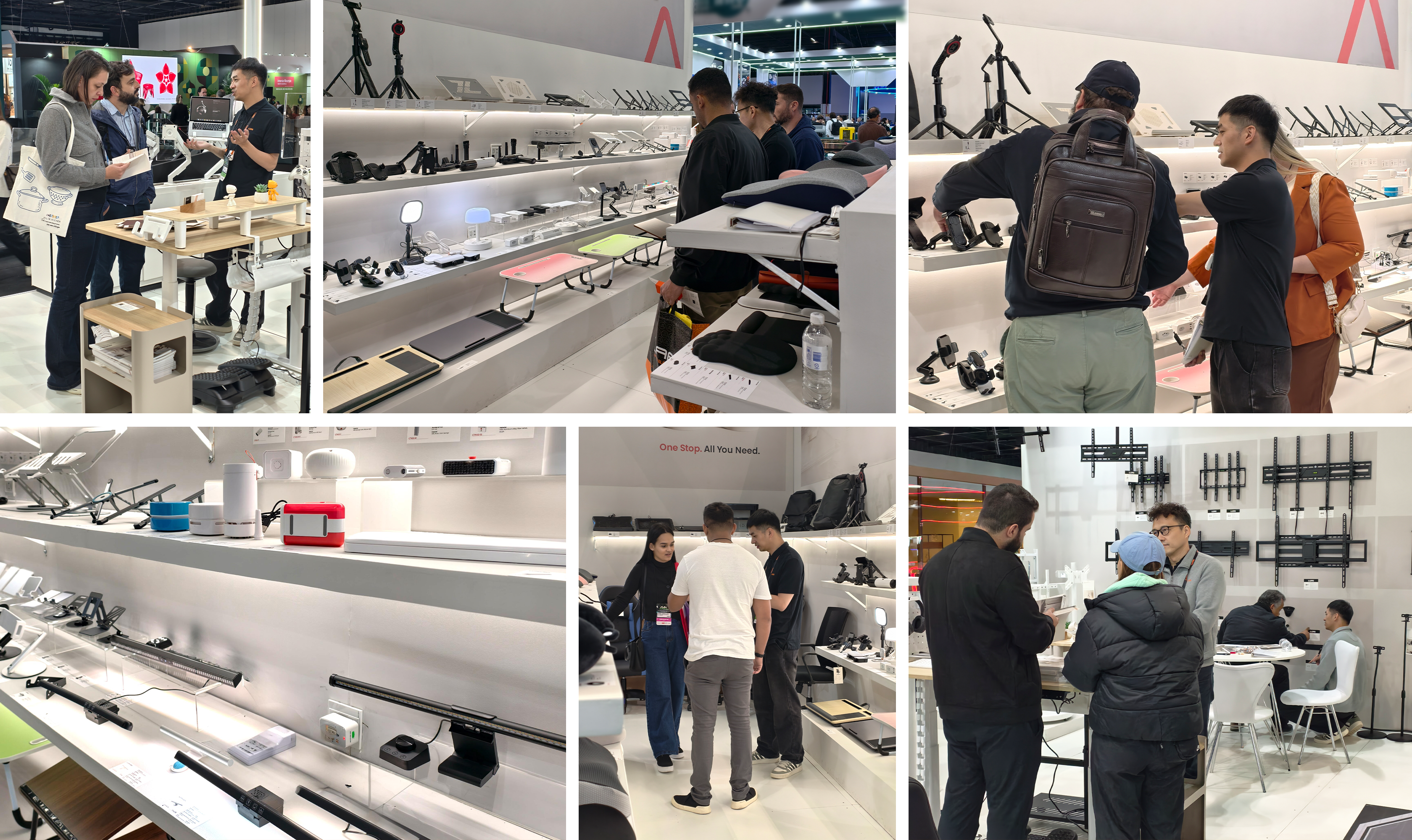
From Products to Experiences: Why Consumer Expectations Are Changing
In the past, many consumer electronics purchases were product-led. A customer needed a device, compared specifications, checked the price, and made a decision.
That behavior still exists, but it is no longer the whole story. Today, many buyers start with a scenario, a pain point, or a desired experience.
| Customer Scenario | What the Buyer Actually Wants |
| Working from home | A comfortable, organized, productive desk |
| Hybrid work | Flexible products that fit both home and office |
| Gaming | Better screen position, lighting, and cable control |
| Online learning | A compact setup for long hours of screen use |
| Small apartments | Multi-purpose products that save space |
| Corporate procurement | Reliable workstation products for many users |
This means consumer electronics trends are becoming more experience-led. A customer may not only search for “monitor arm.” They may search for ways to reduce desk clutter, improve screen height, build a home office, or make a workstation more ergonomic.
That change is important for distributors. A single product listing can win a transaction, but a complete solution can win higher order value, repeat purchases, and stronger customer loyalty.
This is also why trade shows like Electrolar Show 2026 matter. They show how categories are converging. Consumer electronics, workspace furniture, lighting, display support, smart home products, and retail technology trends are now part of the same lifestyle conversation.
For distributors, the lesson is clear: products should be selected, displayed, and sold around use cases, not only around categories.
From Devices to Use Cases: How Consumer Electronics Are Becoming Scenario-Based
Scenario-based selling means organizing products around real-life environments instead of isolated SKUs. This approach is especially relevant to the future of consumer electronics because consumers are building connected spaces rather than just buying single devices.
A modern workspace may include:
| User Need | Relevant Product Category |
| Better screen height | Monitor arms, laptop risers, monitor risers |
| Flexible posture | Sit-stand desks, desk converters |
| Reduced desk clutter | Cable management boxes, cable sleeves, under-desk cable nets |
| Better lighting | Monitor light bars, clamp-on LED desk lamps |
| Comfort during long sitting | Ergonomic chairs, stools, cushions |
| Display support | TV mounts, TV carts, monitor mounts |
| Device organization | Phone stands, tablet stands, vertical laptop holders |
Each product can sell alone, but the stronger value comes from combining them into a complete environment.
This is why consumer electronics are becoming lifestyle technology. The product is still important, but the final value is the lifestyle it enables: cleaner desks, better posture, easier focus, flexible work, smoother entertainment, and more comfortable screen use.
For distributors, this also changes merchandising. Instead of showing “office accessories” as a long product list, products can be grouped by solution.
| Solution Bundle | Suggested Product Mix |
| Home Office Starter Kit | Laptop riser, monitor light bar, cable sleeve |
| Hybrid Worker Kit | Foldable laptop desk, monitor arm, compact cable organizer |
| Ergonomic Workstation | Sit-stand desk, monitor arm, ergonomic chair |
| Meeting Room Display Set | TV cart, TV mount, cable management accessories |
| Gaming Desk Upgrade | Monitor arm, RGB monitor light bar, desk pad, cable box |
This structure helps buyers understand value faster. It also helps distributors present clearer business cases to retailers, e-commerce channels, office suppliers, and B2B procurement customers.
Smart Workspaces: A High-Growth Opportunity in Consumer Electronics
Smart workspaces sit at the intersection of several strong market forces.
First, hybrid work has become a stable part of modern work culture. Gallup’s hybrid work research shows that hybrid work remains a major model among remote-capable employees. This means many users now need workstations that can support both home and office routines.
Second, screen time continues to expand across work, study, entertainment, gaming, and communication. As screen use increases, users become more aware of viewing distance, lighting, desk layout, and posture.
Third, work environments are no longer fixed. One person may work from a corporate desk, a home office, a bedroom corner, a shared workspace, and a laptop setup while traveling. This makes adjustability, portability, and space-saving design more valuable.
Fourth, workspace quality is closely connected to comfort and productivity. OSHA’s computer workstation guidance recommends placing the monitor directly in front of the user, at least 20 inches away, with the top of the screen at or slightly below eye level. OSHA also highlights the role of appropriate desk space, lighting, and glare control in workstation setup.
This is where smart workspace products become more than accessories.
A monitor arm helps users adjust screen height, distance, and angle. A sit-stand desk supports more flexible working postures. A monitor light bar improves focused lighting without taking up desk space. Cable management products reduce clutter and make the workstation look more professional. Ergonomic seating supports comfort during long working hours.
For distributors, smart workspace products offer several advantages:
• They fit both B2C and B2B channels.
• They are easier to bundle than many single electronics categories.
• They support repeat purchases and portfolio expansion.
• They are relevant across home, office, gaming, education, and commercial spaces.
• They connect naturally with consumer electronics innovation without depending only on high-cost devices.
In other words, smart workspace solutions allow distributors to participate in the future consumer electronics market through practical, high-demand categories.
Key Priorities for Distributors Building a Smart Workspace Portfolio
A strong smart workspace portfolio should not be built by adding random accessories. It should be built around buyer needs, channel fit, product compatibility, and long-term category potential.
1. Cover the Core Workspace Problems
Start with the problems customers already understand.
| Problem | Distributor Opportunity |
| Screen is too low | Monitor arms, laptop risers, monitor risers |
| Desk is too crowded | Cable management, vertical holders, compact stands |
| User sits too long | Sit-stand desks, desk converters, ergonomic chairs, cushions |
| Lighting causes discomfort | Monitor light bars, clamp-on LED lamps |
| Devices are hard to organize | Phone stands, tablet stands, laptop holders |
| Meeting rooms need mobility | TV carts, TV mounts, display support products |
This helps distributors create a complete solution instead of a scattered catalog.
2. Prioritize Adjustability and Compatibility
Adjustability is one of the most important features in ergonomic and workspace products. Different users have different body heights, desk types, monitor sizes, room layouts, and working habits.
Distributors should look for products with practical features such as:
These features make products easier to sell across different customer groups.
3. Build Bundles Instead of Only Selling SKUs
The strongest distributors will not only sell individual items. They will create solution bundles that match customer scenarios.
| Customer Type | Recommended Bundle |
| Remote worker | Sit-stand desk, monitor arm, monitor light bar, cable sleeve |
| Corporate office buyer | Ergonomic chair, monitor arm, cable management net |
| Student | Laptop riser, portable lap desk, phone stand |
| Gamer | Monitor arm, RGB monitor light bar, desk pad, cable box |
| Meeting room buyer | TV cart, TV mount, cable management accessories |
This approach can help increase average order value while making product selection easier for customers.
4. Match Products to Sales Channels
Different channels need different product logic.
E-commerce platforms need clear images, scenario-based keywords, comparison tables, and short setup videos. Retail stores need display-friendly items that customers can understand quickly. B2B office suppliers need stable supply, reliable quality, and products suitable for multi-user environments.
A product that works well online may not always be the best hero product for a retail shelf. Distributors should evaluate packaging, demonstration value, price range, compatibility, and cross-selling potential.
5. Make Visual Comparison Easy
Smart workspace products benefit from visual education. Customers buy faster when they can see the difference between a cluttered desk and an organized desk, or between a low laptop screen and an elevated screen.
Useful content formats include:
| Content Type | Purpose |
| Before-and-after desk setup | Shows visible improvement |
| Product comparison table | Helps buyers choose the right model |
| Workspace bundle image | Encourages multi-product purchase |
| Ergonomic setup diagram | Explains posture-related value |
| Short setup video | Reduces uncertainty before purchase |
For distributors, these assets can support retailers, marketplace listings, sales teams, and B2B buyers.
How LUMIVIDA Supports Complete Workspace Solutions for Distributors
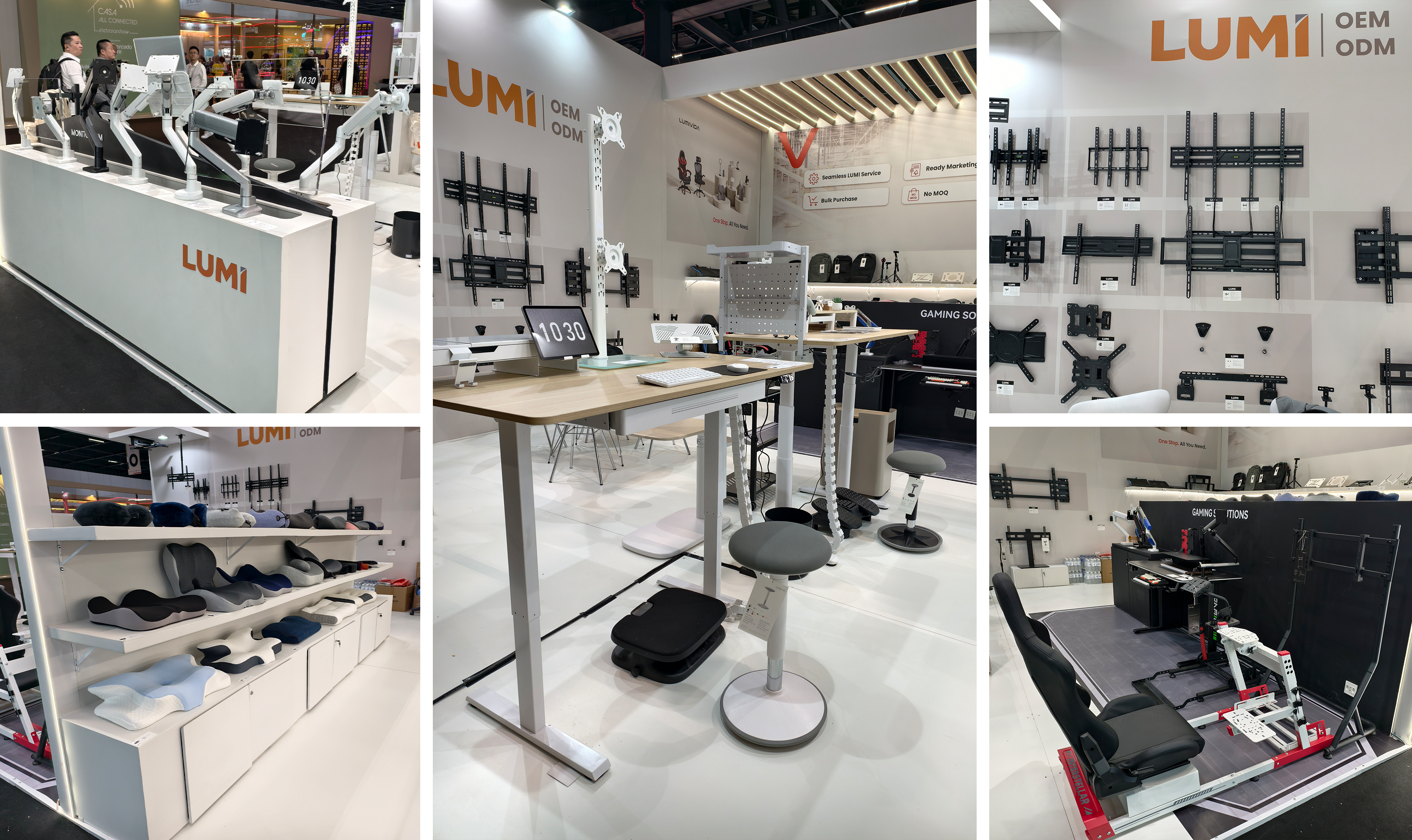
The LUMIVIDA booth at Electrolar Show 2026 offered a clear example of where the consumer electronics industry is heading. Instead of presenting products as isolated accessories, the booth showed a complete workspace and display-support ecosystem.
From the booth display, distributors could see several high-potential product groups, including sit-stand desks, monitor arms, TV mounts, TV carts, ergonomic seating, laptop and tablet stands, cable management accessories, and workspace lighting products.
| Product Group from LUMIVIDA | Market Role for Distributors |
| Sit-stand desks and desk converters | Support flexible workstations for home offices, corporate offices, and hybrid teams |
| Monitor arms | Improve screen positioning, save desk space, and support single-monitor, dual-monitor, gaming, and professional setups |
| TV mounts and TV carts | Serve home entertainment, meeting rooms, education, hospitality, and commercial display projects |
| Laptop and tablet stands | Help users build portable, space-saving work setups |
| Ergonomic chairs and stools | Expand workspace sales from accessories into comfort solutions |
| Cable management accessories | Improve the final desk experience and support bundle selling |
| Monitor light bars and workspace lighting | Add focused lighting for work, study, gaming, and content creation setups |
| Gaming and workspace accessories | Create lifestyle-oriented product combinations for younger users and creators |
This type of product presentation matters because it reflects how distributors can build a more complete portfolio. A monitor arm is no longer just a metal bracket. It can be sold together with a sit-stand desk, cable management system, monitor light bar, laptop stand, and ergonomic seating. A TV mount can be connected to meeting-room solutions, retail displays, classroom equipment, hospitality projects, or home entertainment upgrades.
The booth also showed distributor-friendly service signals, including OEM/ODM capability, bulk purchase support, ready inventory, hot new arrivals, and flexible order support. These points are important for B2B buyers because product quality alone is not enough. Distributors also need supply stability, category depth, fast response, and products that can be adapted to different markets.
On the LUMIVIDA website, distributors can explore categories such as risers and stands, laptop desks, monitor light bars, cable management, pillows and cushions, pads and mats, and ergonomic chairs. Combined with LUMIVIDA’s product coverage in sit-stand desks, monitor arms, TV mounts, TV carts, and workspace accessories, distributors can move from single-product selling to full workspace and display-support solutions.
Example Distributor Portfolio Structure
| Portfolio Level | Product Mix | Target Buyer |
| Essential Workspace | Laptop riser, cable sleeve, monitor light bar | Students, home office users, remote workers |
| Ergonomic Workstation | Sit-stand desk, monitor arm, ergonomic chair, cable management | Corporate offices, hybrid workers, procurement buyers |
| Display Support Solution | TV mount, TV cart, cable management, device shelf | Meeting rooms, schools, retail stores, hospitality |
| Gaming and Creator Setup | Monitor arm, RGB lighting, desk converter, cable organizer | Gamers, streamers, content creators |
| B2B Project Package | TV carts, monitor mounts, workstations, OEM/ODM options | Distributors, system integrators, project buyers |
This is exactly the kind of category logic that fits consumer electronics trends in 2026. Buyers are looking for better environments, not just more devices. Distributors that can package products around work, display, gaming, education, and smart living scenarios will be better positioned to capture growth.
Conclusion: Turning Consumer Trends Into Business Growth
Electrolar Show 2026 shows that consumer electronics are moving toward more connected, flexible, and lifestyle-oriented solutions. Consumers are increasingly looking for complete environments that support work, entertainment, creativity, and daily comfort—not just individual devices.
For ergonomic product distributors, this creates new opportunities. Solutions such as sit-stand desks, monitor arms, TV mounts, TV carts, monitor light bars, cable management accessories, and ergonomic seating can help meet growing demand across home offices, corporate spaces, gaming setups, education environments, and commercial projects.
Distributors that focus on complete user scenarios instead of single products will be better positioned to capture future growth and build stronger market value.
Ready to turn consumer electronics trends into new business opportunities? Explore LUMIVIDA 2026 Best-Selling Catalog to create a smarter, more flexible product portfolio for the future market.