How End-to-End Supply Chain Models in 2026 Reduce Procurement Risk

Note: Dashboard data is for illustrative purposes only.
Sourcing risk is increasing in 2026 as global procurement becomes more exposed to supply chain instability, changing logistics conditions, trade policy uncertainty, and unpredictable demand. For many buyers, procurement is no longer just about finding the lowest price. It is about reducing uncertainty, improving visibility, and building a sourcing model that can respond faster when the market changes.
At the same time, buyers are placing greater value on supply chain stability, flexible purchasing options, and reliable fulfillment support. This shift is pushing procurement strategies from cost-driven decisions toward more risk-aware, flexible, and end-to-end sourcing models.
For global buyers, the key question is clear: how can procurement become more predictable in a market that is becoming less predictable?
Table of Contents
- How Procurement Strategies Are Evolving in Today’s Unstable Supply Chain
- Why Flexible Sourcing Models Are Becoming Essential in 2026
- Why Supply Chain Stability Matters More Than Ever in Modern Sourcing
- Why End-to-End Procurement Support From LUMIVIDA Aligns With the Future of Sourcing Risk Reduction
- Final Action Plan: Turning Procurement Challenges Into End-to-End Supply Chain Solutions
How Procurement Strategies Are Evolving in Today’s Unstable Supply Chain
Traditional Bulk Sourcing Is Becoming Less Effective
Traditional sourcing models were often built around large-volume orders, long purchasing cycles, and fixed supplier commitments. This approach worked better when demand was more predictable and supply chains were more stable.
However, today’s procurement environment is changing quickly. Supply chain disruptions, logistics delays, tariff uncertainty, and shorter product life cycles are making large upfront purchasing decisions more difficult to manage.
For buyers, this creates several common risks:
- Overstock caused by inaccurate demand forecasts
- Missed market windows due to delayed delivery
- Higher inventory pressure from large-volume commitments
- Limited flexibility when product trends change
- Greater exposure to supplier or logistics disruption
As a result, procurement teams are rethinking sourcing models that rely too heavily on scale alone.
Buyers Are Shifting From Low Price to Lower Risk
Cost still matters, but it is no longer the only priority. In a more uncertain supply chain environment, buyers are placing greater emphasis on supplier reliability, operational transparency, and stable delivery performance.
A low unit price may not create real value if the order comes with long lead times, poor visibility, unstable replenishment, or limited after-sales support. For many buyers, the hidden cost of sourcing risk is becoming more important than the visible cost of the product itself.
Modern sourcing decisions are now shaped by questions such as:
- Can the supplier support stable delivery?
- Is there enough inventory visibility?
- Can the buyer test products before scaling?
- Can replenishment be adjusted based on demand?
- Can sourcing, warehousing, and fulfillment be managed more efficiently?
This reflects a broader move from price-first procurement to risk-controlled procurement.
Agile Procurement Is Becoming the New Operating Model
Agile procurement allows buyers to respond faster to market changes. Instead of committing to large quantities at the beginning, buyers can test products in smaller batches, validate market demand, and scale orders when performance becomes clearer.
This model supports:
- Faster product testing
- Lower upfront investment
- Better SKU flexibility
- Reduced inventory pressure
- More responsive replenishment planning
In today’s market, procurement agility is not only a convenience. It is becoming a key part of risk management.
Supply Chain Stability Is Now a Core Business Requirement
Supply chain stability has moved from being an operational advantage to a strategic requirement. Buyers need sourcing partners that can provide consistent availability, faster fulfillment, and stronger coordination across the supply chain.
A stable sourcing model helps buyers protect sales opportunities, reduce uncertainty, and support more sustainable long-term growth.
Market and Policy Changes Are Increasing Procurement Pressure
In 2026, procurement teams are facing a sourcing environment shaped by policy changes, tariff pressure, cost volatility, and shifting demand. According to RELEX’s 2026 State of the Supply Chain report preview, 86% of supply chain leaders said trade policy changes or tariffs had already impacted their operations, creating difficult trade-offs across pricing, sourcing, and inventory management.
KPMG also notes that ongoing tariffs and trade disruption are likely to continue in 2026, with new duties potentially changing landed costs quickly and forcing teams to reconsider sourcing, shipping routes, and customer pricing.
For buyers, this means sourcing strategies must become more flexible and more responsive.
Smaller Initial Orders Help Buyers Reduce Risk
Large upfront orders can create serious pressure when demand is uncertain. If the product performs well, the buyer may need fast replenishment. If demand is weaker than expected, the buyer may face overstock, markdowns, and cash flow pressure.
Small-batch purchasing gives buyers more control before scaling.
|
Procurement Challenge |
Flexible Sourcing Response |
Buyer Benefit |
|
Uncertain market demand |
Start with smaller batches |
Lower inventory risk |
|
Short product cycles |
Test more SKUs faster |
Better market responsiveness |
|
High upfront investment |
Reduce initial order pressure |
Improved cash flow control |
|
Demand fluctuation |
Adjust replenishment based on sales |
More accurate purchasing decisions |
|
Supplier uncertainty |
Validate supplier performance earlier |
Lower sourcing risk |
No MOQ Models Make Product Testing Easier
No MOQ sourcing gives buyers more freedom to test new products without being locked into large-volume commitments. This is especially useful when buyers need to explore new categories, test seasonal items, or respond quickly to fast-changing consumer trends.
With No MOQ support, buyers can:
- Test multiple SKUs with lower pressure
- Reduce the risk of slow-moving inventory
- Validate product-market fit earlier
- Make purchasing decisions based on real demand
- Scale successful products with more confidence
Flexibility Is Becoming More Valuable Than Scale Alone
In the past, procurement value was often measured by purchasing volume and unit cost. In 2026, flexibility is becoming just as important.
A flexible sourcing model helps buyers move faster, reduce uncertainty, and build a more resilient procurement strategy. Instead of asking only “How much can we buy?”, modern buyers are asking “How safely can we test, adjust, and scale?”
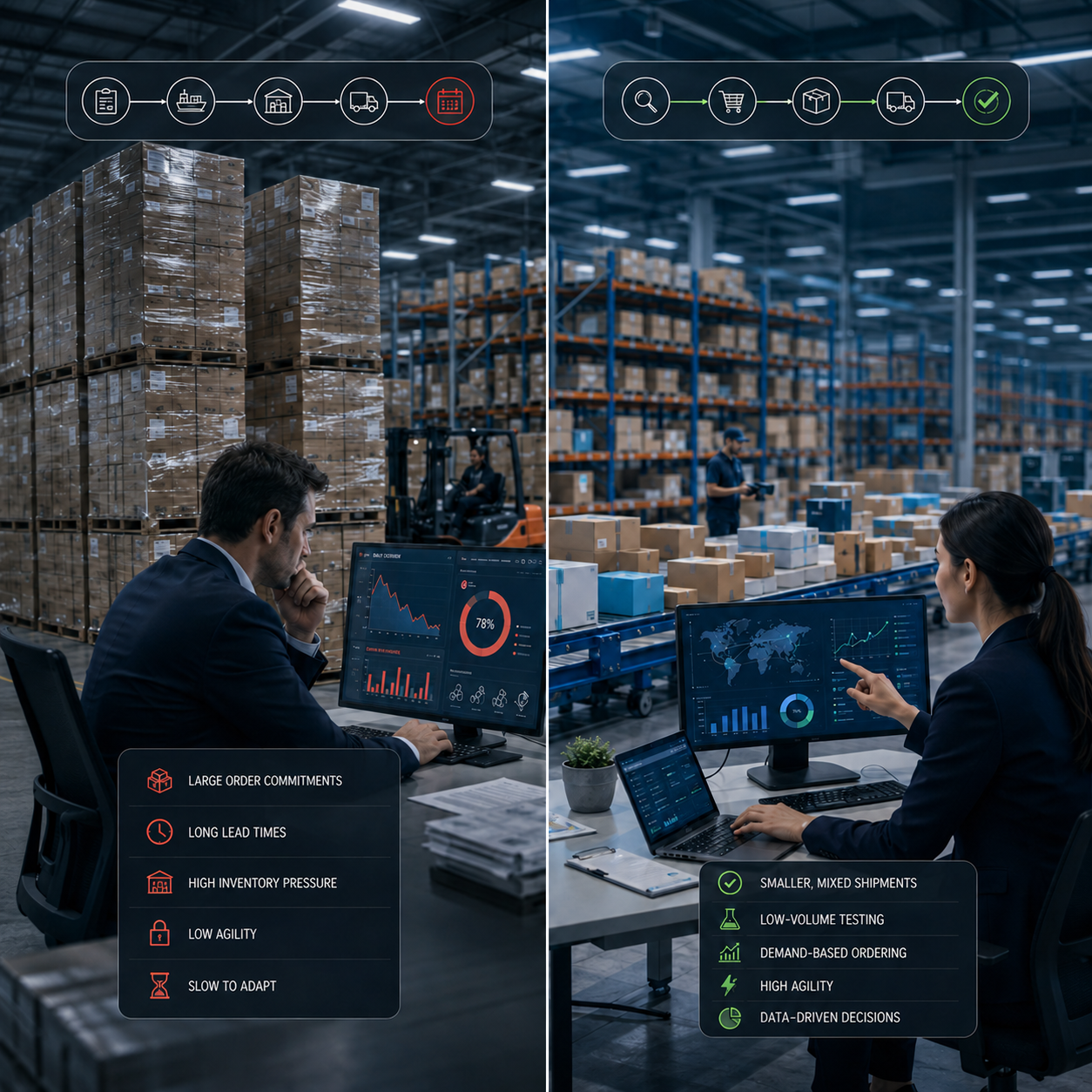 Note: Dashboard data is for illustrative purposes only.
Supply Chain Instability Creates Two-Sided Inventory Risk
Unstable supply chains can create two opposite but equally serious problems: too much inventory or not enough inventory.
When buyers order too much too early, they risk overstock, storage pressure, and slower cash flow. When replenishment is delayed, they risk out-of-stock situations, lost sales, and missed market opportunities.
This makes supply chain stability essential for balancing inventory and demand.
Supplier Reliability Is Becoming More Important Than Low Price
A sourcing partner’s reliability now has a direct impact on business performance. Buyers are paying more attention to whether suppliers can provide stable inventory, clear communication, faster replenishment, and dependable fulfillment support.
The table below shows how buyer priorities are changing:
|
Old Procurement Focus |
New Procurement Focus |
|
Lowest unit price |
Lower total sourcing risk |
|
Large-volume purchasing |
Flexible testing and scaling |
|
Single-order transaction |
Long-term supply chain support |
|
Product-only sourcing |
End-to-end procurement support |
|
Short-term savings |
Stable and sustainable growth |
Ready Inventory Improves Delivery Predictability
Ready inventory helps reduce uncertainty by shortening the gap between order placement and fulfillment. When buyers can access available stock and faster replenishment, they can respond more confidently to demand changes.
This is especially important for wholesalers, distributors, and online sellers that need to maintain product availability while avoiding excessive inventory pressure.
Stable Supply Chains Support Sustainable Growth
Supply chain stability is not only about avoiding disruption. It also helps buyers build a stronger foundation for growth.
A more stable supply chain can support:
- Better sales planning
- More predictable fulfillment
- Faster response to market demand
- Lower operational pressure
- Stronger long-term supplier relationships
For modern procurement, stability is becoming one of the most important drivers of sustainable growth.
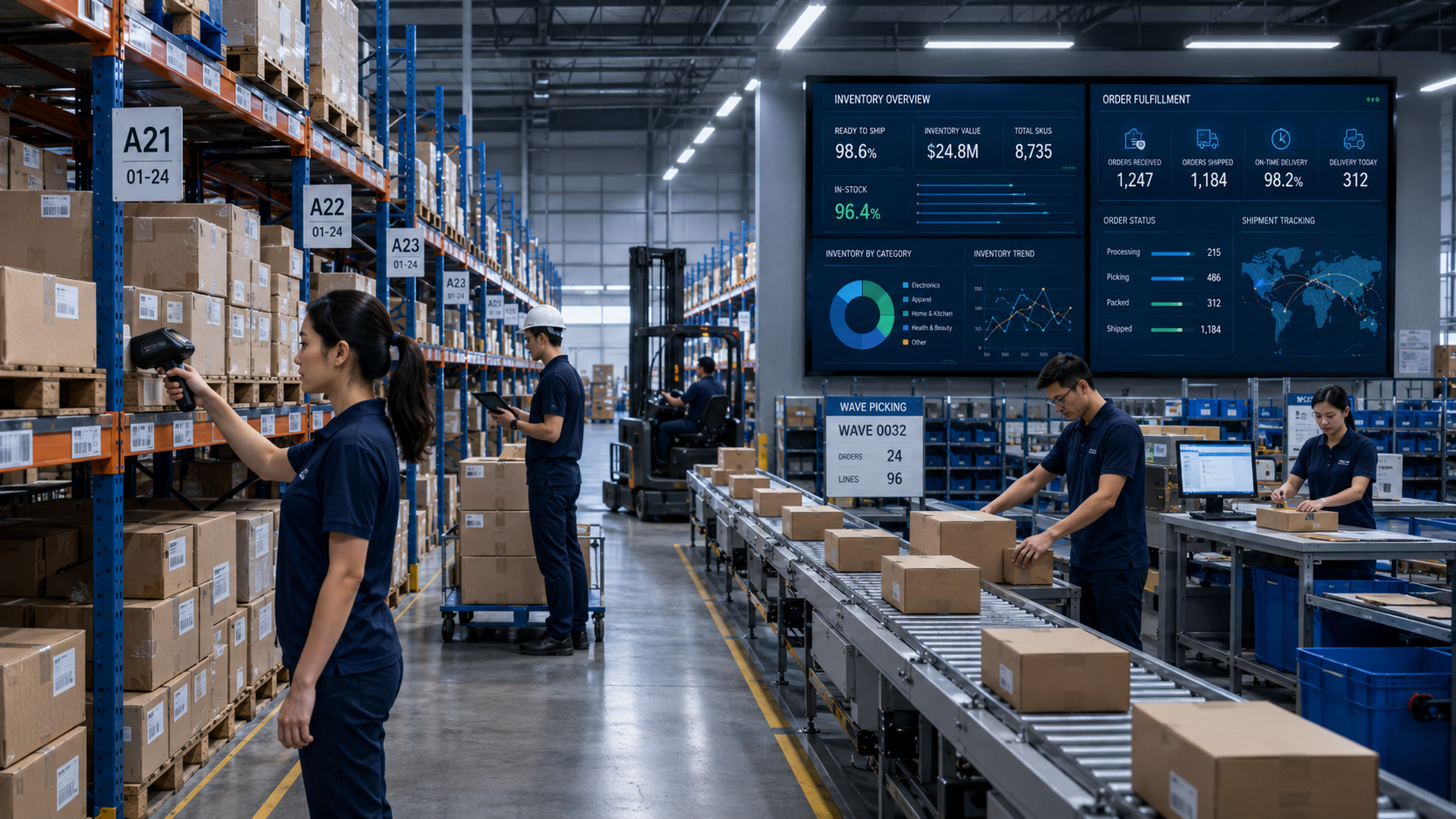 Note: Dashboard data is for illustrative purposes only.
Why End-to-End Procurement Support From LUMIVIDA
Aligns With the Future of Sourcing Risk Reduction
End-to-End Support Reduces Execution Gaps
Fragmented supply chains often create execution gaps between sourcing, inventory, warehousing, and fulfillment. These gaps can lead to delays, unclear responsibility, poor visibility, and higher operational risk.
LUMIVIDA’s end-to-end procurement support helps connect key sourcing stages into a more integrated process. By bringing sourcing, product selection, inventory support, and fulfillment coordination together, buyers can manage procurement with greater visibility and control.
No MOQ and Batch Purchasing Reduce Upfront Risk
LUMIVIDA supports flexible sourcing models such as No MOQ and batch purchasing, helping buyers reduce the pressure of large initial orders.
This is especially valuable when buyers need to:
- Test new product categories
- Validate market demand
- Reduce upfront purchasing pressure
- Avoid unnecessary stock accumulation
- Scale orders based on actual sales performance
Instead of forcing buyers into rigid order volumes, flexible sourcing allows procurement decisions to become more demand-driven.
Ready Inventory and Warehousing Support Improve Fulfillment Stability
Ready inventory helps buyers shorten response time and improve delivery predictability. LUMIVIDA’s 15,000㎡ smart warehouse and 6 months of free warehousing support help buyers manage inventory more flexibly while reducing storage pressure.
|
LUMIVIDA Capability |
How It Reduces Risk |
Buyer Benefit |
|
Ready inventory |
Reduces waiting time |
Faster fulfillment |
|
15,000㎡ smart warehouse |
Supports stock availability |
More stable supply |
|
6 months free warehousing |
Reduces storage pressure |
Lower inventory burden |
|
Flexible inventory management |
Supports demand-based replenishment |
Better cash flow control |
|
Batch purchasing |
Allows gradual scaling |
Lower upfront risk |
Hot New Arrivals Improve Product Selection Accuracy
Product selection is another important part of procurement risk. Choosing the wrong product can create inventory pressure, slow sales, and missed market opportunities.
With 20 years of industry experience, LUMIVIDA’s Hot New Arrivals help buyers identify market-driven product opportunities more efficiently. This supports more accurate product selection and helps buyers respond faster to category trends.
Seamless LUMI Service Simplifies Procurement Complexity
LUMIVIDA is supported by a network of 3,000+ suppliers, helping buyers simplify sourcing and operational coordination. Through Seamless LUMI Service, buyers can access a more integrated procurement process instead of managing multiple disconnected sourcing steps.
This helps reduce complexity in areas such as:
- Supplier sourcing
- Product selection
- Inventory coordination
- Fulfillment support
- Procurement communication
- Long-term replenishment planning
By combining flexibility, inventory support, supplier resources, and end-to-end service, LUMIVIDA helps turn procurement into a more structured, controlled, and scalable process.
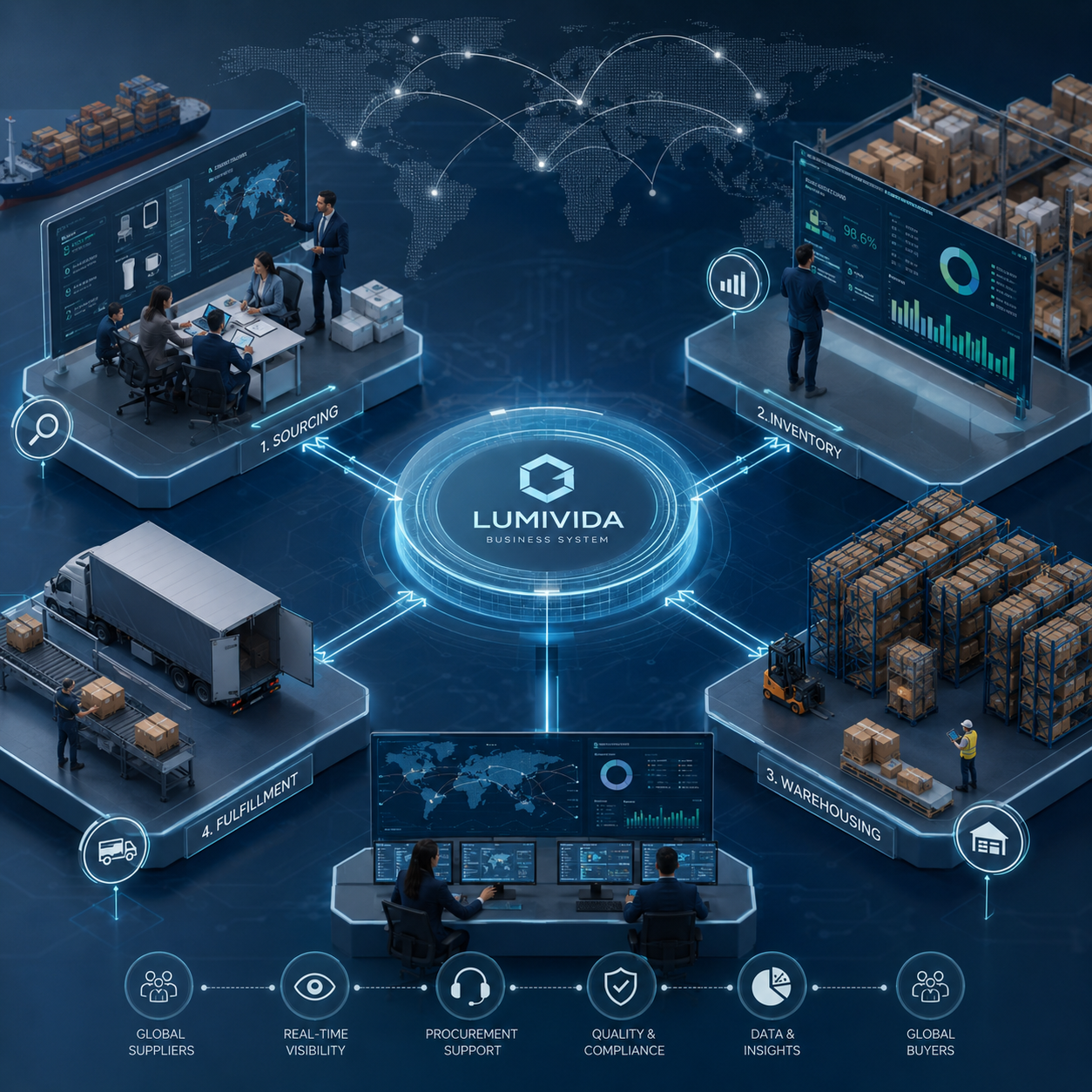 Note: Dashboard data is for illustrative purposes only.
Final Action Plan: Turning Procurement Challenges Into End-to-End Supply Chain Solutions
Step 1: Identify the Main Sources of Procurement Risk
Before improving procurement strategy, buyers need to understand where risk is coming from. Common risk factors include unstable lead times, uncertain demand, large upfront order pressure, limited supplier visibility, and fragmented sourcing operations.
A clear risk review helps buyers decide which sourcing model is most suitable for their business.
Step 2: Move From Product-Only Sourcing to End-to-End Procurement
Product sourcing alone is no longer enough. Buyers need solutions that connect product selection, sourcing flexibility, inventory support, warehousing, and fulfillment into one more predictable system.
An end-to-end model gives buyers better control across the procurement process.
Step 3: Use Flexible Sourcing to Test Before Scaling
Instead of committing to large-volume orders too early, buyers can use No MOQ and batch purchasing to test products with lower risk. This helps improve product validation and allows buyers to scale only after demand becomes clearer.
Step 4: Strengthen Supply Chain Stability With Ready Inventory
Ready inventory and warehousing support can help buyers improve fulfillment speed and reduce delivery uncertainty. This is especially important when demand changes quickly or when buyers need to capture short market windows.
Step 5: Build a More Predictable Growth Model With LUMIVIDA
LUMIVIDA helps buyers reduce sourcing risk through flexible sourcing, ready inventory, Hot New Arrivals, and Seamless LUMI end-to-end service. Together, these capabilities support faster testing, stronger supply chain stability, and more predictable procurement outcomes.
Ready to upgrade your sourcing strategy in 2026?
Contact LUMIVIDA and explore our 2026 best-selling product catalog to achieve more stable growth and more predictable business outcomes.